HSB practice tools
Supporting children and young people can feel overwhelming at times. The resources here may help.
Whether you’re a professional, a carer or a parent, there may be moments when you feel unsure how to move forward, especially when HSB concerns arise.
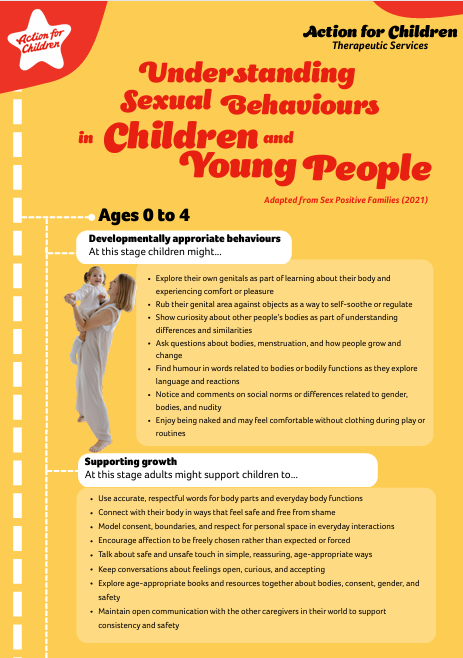
Understanding Sexual Behaviours in Children and Young People
This resource outlines what sexual behaviours are developmentally typical for children and young people at different ages, and which behaviours may signal a need for guidance, curiosity, learning, or additional support from adults. It explains how children explore their bodies, boundaries, and relationships as part of growing up, and highlights when behaviours may be outside what is expected for their stage of development.
The document offers practical ways for adults to respond with clarity and openness - using accurate language, modelling consent and boundaries, and keeping communication shame‑free. It emphasises creating supportive environments where children and young people can ask questions, understand their bodies, and feel safe to talk about worries or confusing experiences.
🖱️Understanding Sexual Behaviours in Children and Young People
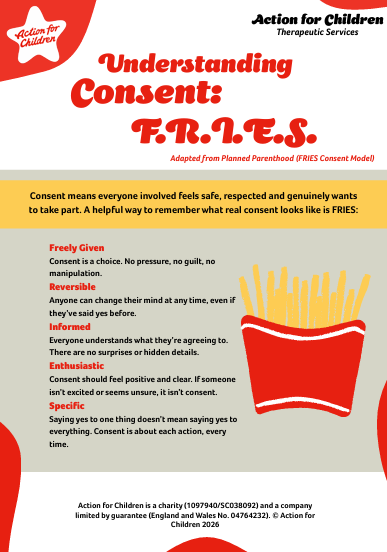
FRIES: Understanding Consent (adapted from Planned Parenthood)
The FRIES model is a simple way to explain what real consent looks like. The resource breaks consent into five key qualities - Freely given, Reversible, Informed, Enthusiastic and Specific - and uses short, accessible explanations to show that consent is about choice, clarity and respect.
The page encourages young people to think about boundaries, communication and mutual agreement, and highlights that consent should always feel positive, informed and changeable. It’s designed to make conversations about consent straightforward, memorable and easy to apply in real-life situations.
Consent Toolkit
The Consent Toolkit is a resource designed to help adults teach young people about consent, communication and respectful boundaries. It offers guidance, activities and discussion prompts that explain what consent means, how to recognise it, and how to navigate situations where someone feels unsure or uncomfortable.
The toolkit emphasises building confidence, mutual respect and clear communication, helping young people understand their rights, respect others’ boundaries and seek support when needed.
Expect Respect: Healthy Relationships Toolkit
The Expect Respect toolkit is designed to help schools and youth organisations teach children and teenagers about healthy, respectful relationships. It provides structured lesson plans, activities and discussion prompts that build understanding of boundaries, communication, equality and how to recognise unhealthy or abusive behaviour.
The resource supports adults to create safe, age‑appropriate conversations and helps young people develop confidence, empathy and the skills to form positive relationships. It emphasises early education, prevention and knowing when and how to seek help for themselves or others.
Parental Controls Guide
This guide helps parents and carers set up practical tools that make children’s online experiences safer. It explains how to use built‑in parental controls across devices, apps and services, and highlights the importance of combining technical settings with regular conversations about online life.
The resource covers safety features on operating systems, home broadband, games consoles, social media, streaming platforms, search engines, mobile devices and smart assistants. It outlines ways to manage screen time, filter inappropriate content, restrict communication, set age‑appropriate limits and protect personal information. The guide also signposts trusted organisations, helplines and reporting routes, supporting families to respond confidently if something online feels unsafe or concerning.
Parental Controls: A Guide for Families
This guide helps parents and carers understand how to use parental controls to support children’s safety and wellbeing online. It explains the range of tools available - from filtering and monitoring software to screen‑time limits and device settings - and how these can be used to manage content, restrict access and support safer online experiences.
The resource emphasises that while parental controls can be helpful, they are not a complete solution. It encourages open conversations, trust and age‑appropriate independence, helping children develop critical thinking, self‑regulation and responsible online behaviour. It also highlights the importance of tailoring approaches to each child’s needs, being transparent about monitoring, and gradually reducing controls as children grow in confidence and maturity.
8–10s Online Safety Toolkit
This toolkit helps adults teach children aged 8–10 how to stay safe, kind and confident online. Through short activities and the Play Like Share cartoon series, it introduces key skills for navigating online friendships, sharing images, live streaming and gaming.
Children learn about consent, privacy, respectful behaviour and how to recognise pressure or unkind behaviour online. The resource emphasises creating a safe learning environment, using clear ground rules, and encouraging children to talk to trusted adults whenever something feels worrying or confusing. It supports young people to make thoughtful choices and build healthy digital habits.
Sex is Kind of Broken Now: Children and Pornography
This report explores how children and young people are being affected by today’s online environment, where they are frequently exposed to material that is not designed for them and can distort their understanding of relationships, safety and intimacy. It highlights how early or repeated exposure can shape expectations, influence behaviour and contribute to harmful pressures.
The document draws on young people’s voices, showing how many feel confused, worried or negatively impacted by what they encounter online. It also outlines the responsibilities of tech companies, adults and policymakers to create safer digital spaces, improve education and ensure children receive clear, age‑appropriate guidance about relationships, respect and wellbeing.
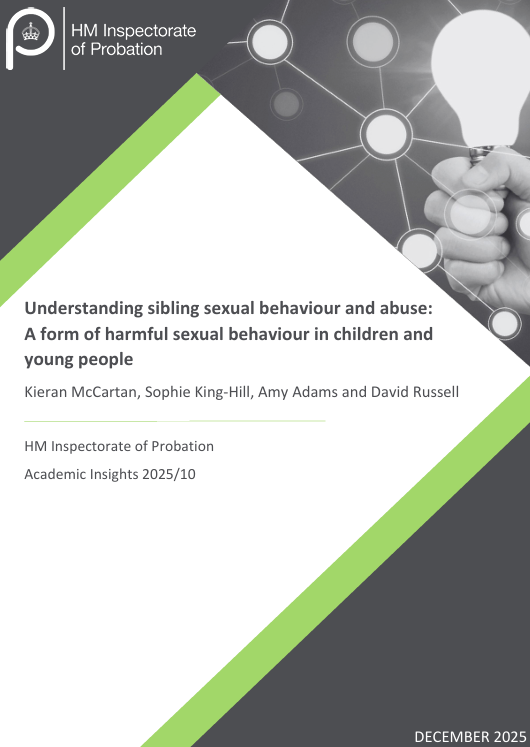
Understanding Sibling Sexual Behaviour and Abuse
This resource explores how sexual behaviour between siblings can emerge, why it is harmful, and how families and professionals can respond with clarity and care. It explains the dynamics that make this behaviour unsafe, the impact it can have on everyone involved, and the importance of creating supportive, protective environments. The document also offers guidance on helping children feel safe, understood and appropriately supported as part of a wider safeguarding approach.
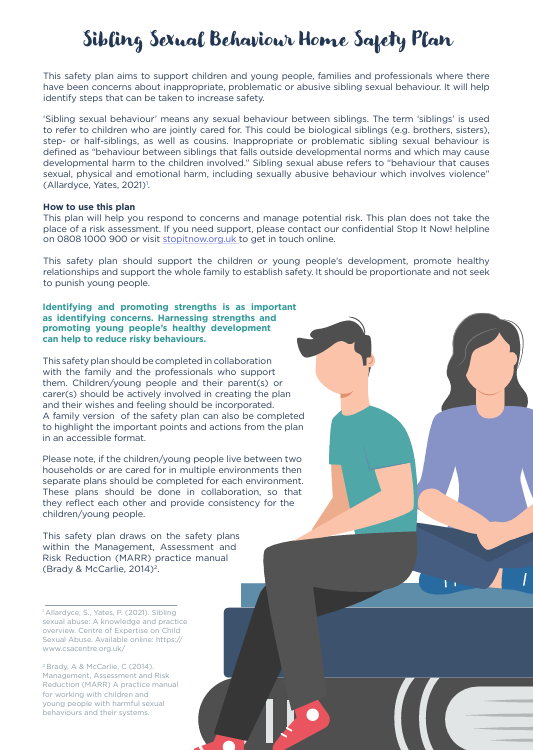
Sibling Sexual Behaviour Safety Plan
This resource provides practical guidance for creating a structured safety plan when there are concerns about sexual behaviour between siblings. It focuses on reducing risk, setting clear boundaries, and ensuring that all children in the family feel safe and supported.
The document outlines how adults can organise supervision, manage routines, adjust the home environment, and communicate expectations in a calm, consistent way. It also emphasises the importance of understanding each child’s needs, working with professionals, and reviewing the plan regularly as circumstances change.
The overall aim is to help families create a stable, protective environment while supporting children’s wellbeing and recovery.
Sex Ed Toolkit
This toolkit is designed to help educators, parents and support staff teach young people - including those who are neurodivergent - about healthy relationships, bodies, boundaries and safety. It provides practical guidance, lesson ideas and visual supports that make sexual health education accessible and developmentally appropriate.
The resource covers key topics such as consent, communication, personal space, public vs. private behaviour, understanding feelings and recognising unsafe situations. It emphasises building skills gradually, using clear language and supporting young people to make informed, confident decisions about their own wellbeing.
Sex‑Positive Talks to Have With Kids
This is a guide for parents and carers on having open, healthy and age‑appropriate conversations with children about bodies, boundaries, relationships and growing up. The book focuses on building confidence, trust and communication, helping adults talk about sensitive topics in a positive, shame‑free and developmentally suitable way.
If you’d like to find out more about how we can support you, please do get in touch.