Carers & professionals hub
Supporting children and young people can sometimes feel overwhelming. Take a look at how we could help.
Whether you’re a professional or a foster carer, there may be moments when you feel lost, unsure of the right direction to take, or maybe you're waiting for therapeutic support to begin.
This space has been designed with you in mind - a place where guidance is at your fingertips. Here, you’ll find resources that can be:
- Quick reference tools to help in the moment
- Opportunities to expand your skills and knowledge
- Practical support while waiting for therapeutic input
We know the journey isn’t always straightforward, but you don’t have to navigate it alone. Explore, learn, and find reassurance in knowing that there are tools here to strengthen your practice and support the children in your care.
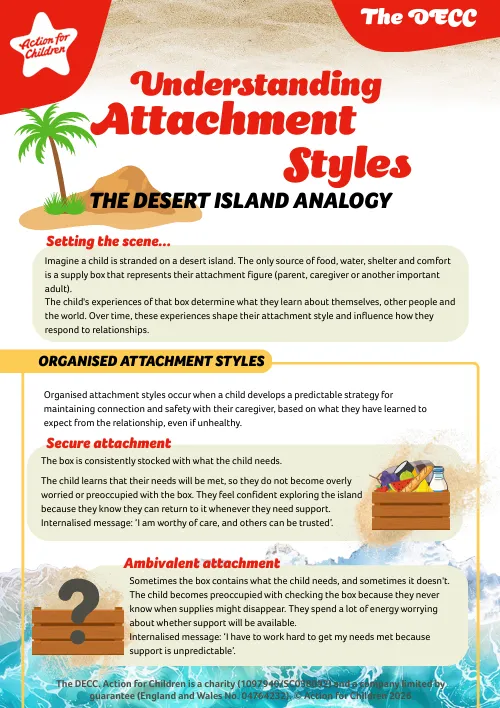
Understanding Attachment Styles: The Desert Island Analogy
Based on attachment theory, this resource uses the analogy of a desert island to show how children's experiences of care shape their expectations of themselves and others. Through repeated interactions with caregivers, children develop attachment styles and internal beliefs about whether their needs will be met, influencing how they form relationships and seek support throughout life.
🖱️Understanding Attachment Styles - the Desert Island Analogy
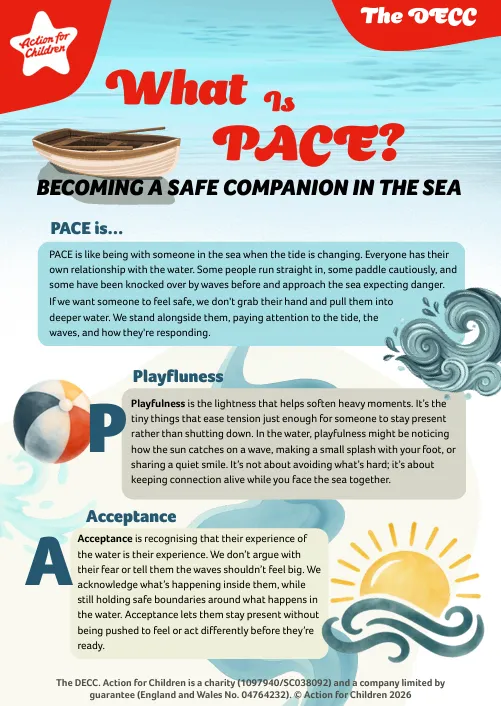
What is PACE? Becoming a Safe Companion in the Sea
Drawing on PACE (Playfulness, Acceptance, Curiosity and Empathy), developed by Dan Hughes (2007), this resource uses the metaphor of the sea to illustrate how caregivers can support children through emotional ups and downs. Rather than trying to control or change a child's feelings, PACE encourages adults to remain connected, understanding and responsive, helping children feel safe, accepted and supported as they navigate their experiences.
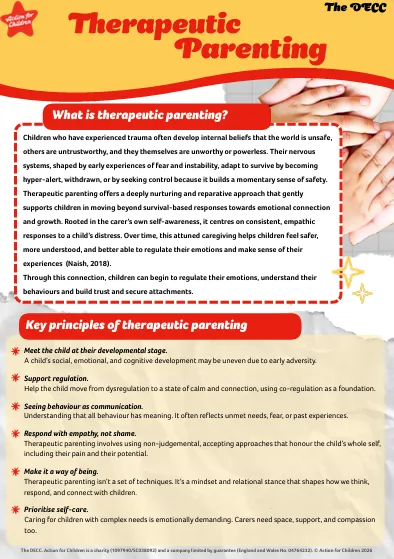
Therapeutic Parenting (Leaflet)
This leaflet introduces the principles and purpose of therapeutic parenting, a trauma-informed approach that supports children who have experienced early adversity. It explains how consistent, empathic caregiving can help children move from survival-based responses to emotional connection, regulation, and long-term resilience.
Inside, you’ll find key principles, goals, and frameworks like the Pyramid of Therapeutic Needs, helping you respond with insight, empathy, and consistency.
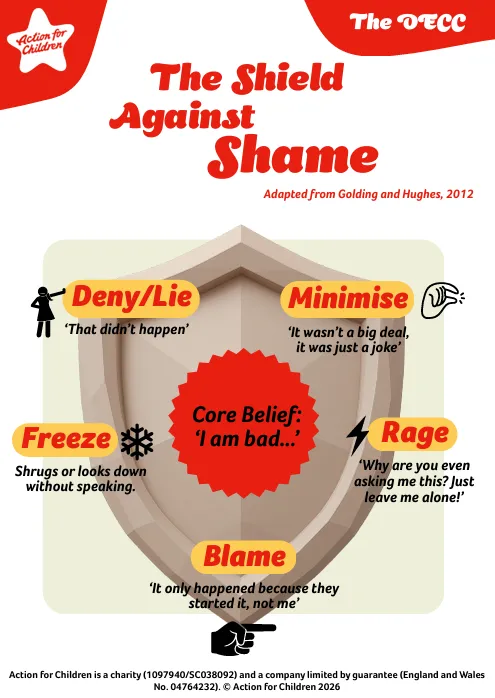
The Shield Against Shame
This resource shows how, when children feel deep shame, often rooted in their early experiences of relational trauma, they instinctively use protective responses such as denying or blaming to shield themselves from the intensity of this feeling, linked to a core belief of 'I am bad'. These reactions are not deliberate choices but automatic ways of coping with overwhelming emotions. Becoming aware of this, can help caregivers respond to the child or young person's needs with empathy and understanding.
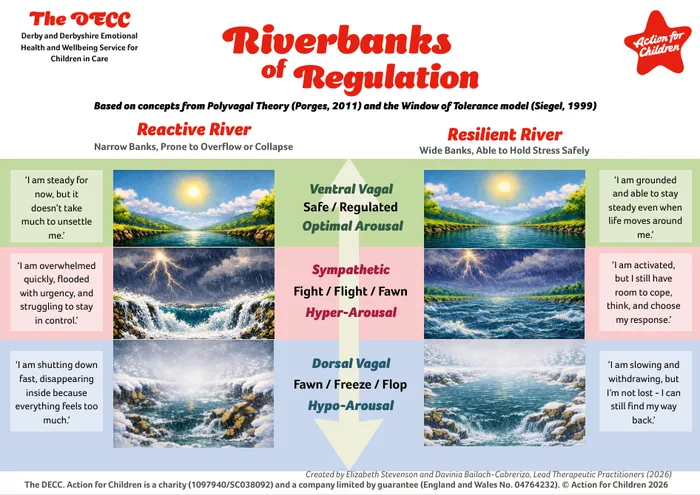
Riverbanks of Regulation
Drawing on Polyvagal Theory (Porges, 2011) and Siegel's Window of Tolerance (1999), this resource uses the metaphor of riverbanks to illustrate a child's capacity to regulate emotions and cope with stress. Wide, resilient riverbanks represent a broader window of tolerance, enabling a child to remain regulated and respond flexibly to challenges. Narrow, reactive riverbanks reflect a reduced capacity to manage stress, increasing the likelihood of hyper-arousal (fight, flight, fawn) or hypo-arousal (freeze, flop, shutdown). Understanding these states can help caregivers provide support that promotes safety, connection and emotional regulation.
Therapeutic Games for Young People (Leaflet)
This guide introduces a wide range of therapeutic games designed to support children and young people with emotional regulation, communication, confidence, social skills, and grounding. It explains why choosing activities based on a child’s developmental stage is essential, and offers practical tips for creating emotional safety and adapting games to individual needs.
Inside, you’ll find themed lists covering family games, anxiety and anger tools, impulse‑control activities, therapeutic computer games, and simple sensory or grounding exercises. Each game includes age ranges and a short description, making it easy to identify what might help the child or young person you’re supporting.
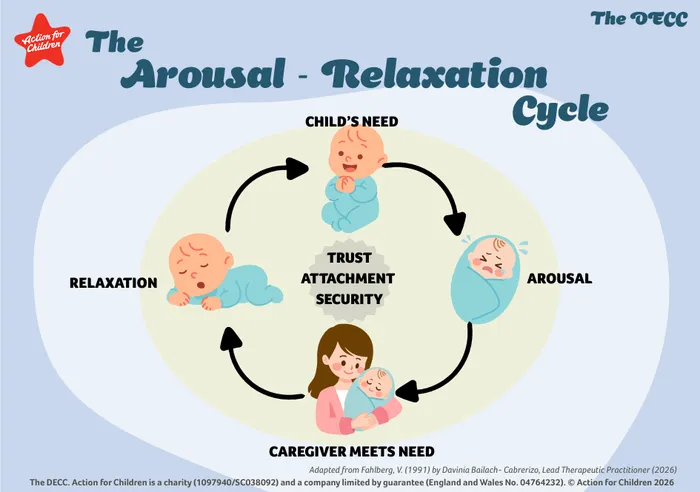
The Arousal–Relaxation Cycle
Based on Fahlberg's (1991) work, this resource shows how a child's needs create arousal and distress, which are soothed when a caregiver responds sensitively and consistently. Through repeated experiences of having needs met, the child develops trust, secure attachment, and a sense of safety.
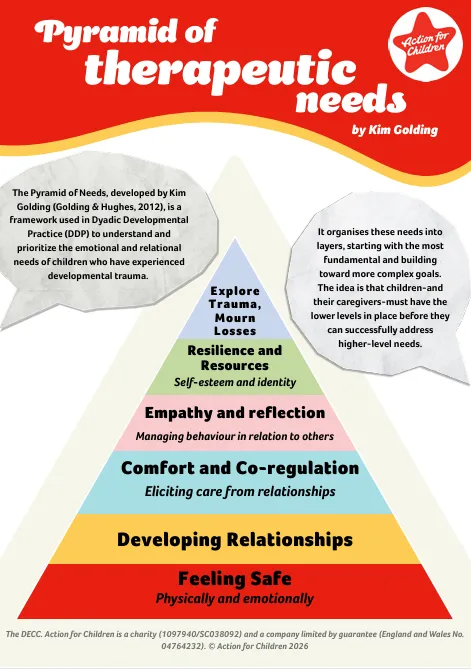
Pyramid of Therapeutic Needs
This leaflet outlines Kim Golding’s Pyramid of Therapeutic Needs, a DDP framework that helps caregivers understand the step‑by‑step emotional needs of children who have experienced developmental trauma. It shows how children move from 'feeling safe physically and emotionally' toward reflection, resilience, and processing trauma, supported by consistent, attuned caregiving.
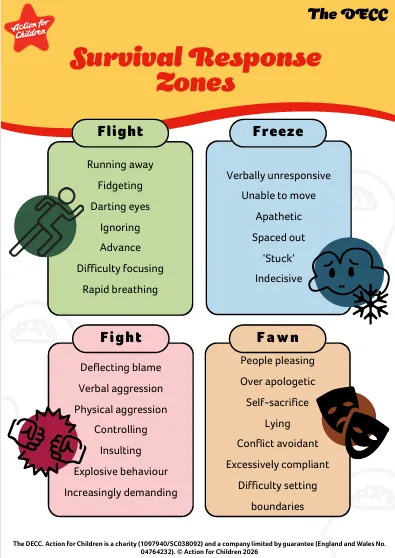
Survival Response Zones
This poster offers a clear visual breakdown of four instinctive trauma responses: Flight, Freeze, Fight, and Fawn. Each zone highlights specific behaviours that children and young people may display when experiencing stress or emotional overwhelm.
Understanding these zones can deepen your trauma-informed approach and help you interpret behaviours that may otherwise be misunderstood.
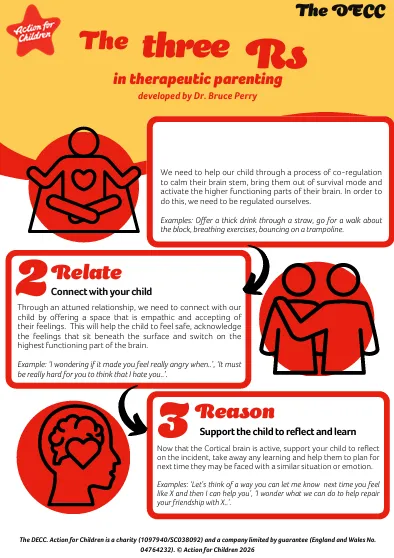
The Three Rs
Developed by Dr. Bruce Perry, this poster outlines a trauma-informed approach to parenting and caregiving through three essential steps: Regulate, Relate, and Reason. These stages help adults support children in managing emotional distress and building resilience.
Understanding and applying the Three R’s can transform how we respond to children in moments of distress, helping them feel safe, seen, and supported.